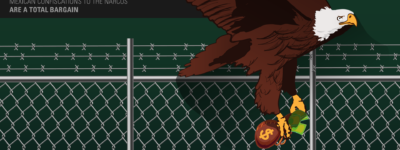
More than 850 Mexican drug traffickers have been extradited to the United States. But then, when the work seems to be done, Mexico realizes that in just a few cases it investigated enough to seize the finances of the mafias. Now a new chapter threatens to sour the binational fight against drug trafficking: the claim the United States has made of the fortunes of the capos.

In Venezuela, less than fifty military officers are entrusted the mission of administering justice to their military counterparts. But as the Government of Nicolás Maduro sends more political dissidents and insubordinate civilians to be tried in that jurisdiction the weakest flanks of a lodge of judges arbitrarily appointed by the Ministry of Defense, who have unclear merits and a clear willingness to follow orders, are more evident.
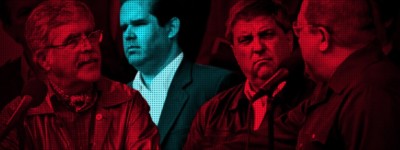
Without leaving a trace, José María Olazagasti, the obscure lieutenant of the Kirchnerist Minister of Planning, Julio De Vido, disappeared. Olazagasti, from the shadow, and De Vido, in public, both were the architects of the golden age of trade agreements between the Pink House and the Miraflores Palace. Most of these deals show no visible work, and some of them are the starting points of legal cases that begin to spread around in Argentina. The personal secretary was the one who managed with whom to meet and for what business.

A contagious disease has reappeared in Venezuela. After 24 years of being considered eradicated, the inhabitants of the south of the country are experiencing a diphtheria outbreak of hitherto incalculable scales. Minister of Health Luisana Melo has recognized as official medical report only two deaths out of the four cases confirmed by her office until October 11. But several death certificates, collected in situ by Armando.info, indicate that the number of deaths is higher.

The former Vice President of Finance and director of the state oil company was one of the executives in the industry with more charges and accusations. In 2006, the Office of the Comptroller opened a proceeding against him for not filing the sworn statement of assets. In 2011, he became noticeable for his alleged participation in the Ponzi scheme of Francisco Illaramendi. In 2009, four years after having him as a client, Mossack Fonseca learned that he was a Politically Exposed Person, but maintained the business relationship because no "links to illegal activities" were found.
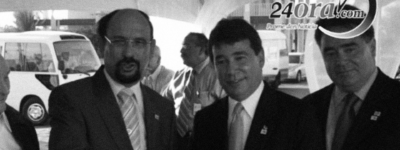
After making friends with chavista and opposition politicians, the brothers Leopoldo and Andrés Castillo Bozo were charged in 2009 by the Venezuelan Prosecutor for the crime of identity theft to buy public debt bonds. The Panama Papers revealed that at the time, the owners of Grupo Banvalor had three companies in the Virgin Islands, in addition to 22 more companies distributed in the United States of America, Aruba, the Dominican Republic, and Panama. Never had a flight been so well secured.
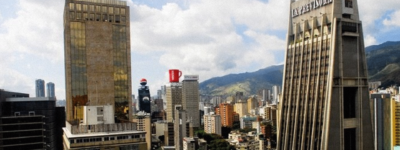
The investor, now exiled in the United States, seized the company in the vertiginous 2009, the year of the banking mini-crisis. By an intricate operation of legal and financial engineering through Panama, with Spanish advisers and some 'shelf companies', he made sure that the purchase would produce profits even if his property was expropriated and he was forced to flee abroad.

Sometimes intermediary, others, supplier, but always omnipresent, this Venezuelan is one of the most active and unknown person in the registration of companies in tax havens of the Caribbean. Many of these companies were incorporated ad hoc to do business with Corporación Casa, a food import state entity.
A handshake between Hugo Chávez and Jiang Zemin, President of China, sealed a commercial relationship between Caracas and Beijing that totals two decades of cooperation marked by thousands of dollars and debts, half efficiency, and much opacity. Now, hundreds of official documents obtained by Armando.info and processed together with the Latin American Center for Investigative Journalism (CLIP) reveal, through a series of stories, how this exchange flowed, which was not always advantageous for Venezuela.
Read serie