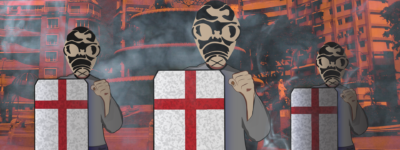
They cover their faces with masks or t-shirts. They improvise shields for self protection. They prepare and throw homemade bombs. They build barricades with whatever they get, and when they go to the marches, they are seen at the head of the protesters confronting the State security forces. Although not all the people who identify with the resistance know each other or act in the same way in the conflict zones located in the metropolitan area of Caracas, these are the main elements that distinguish the members of these groups, which are mostly from popular sectors and that, despite not ideologically connecting with the government of Nicolás Maduro, do not always follow the agenda of the Venezuelan opposition.
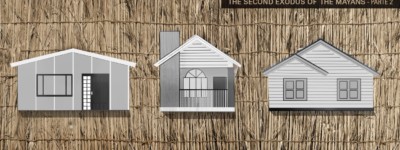
The Mayas, who in the classical era of their civilization mysteriously depopulated large stone cities in Mesoamerica, now, a millennium later, abandon their adobe and thatched roof villages in the Yucatán peninsula at a rate that could be comparable. Every year, over a thousand cross the border into the United States. This time their motives are not a mystery: local poverty and the promise of a better life, especially in California, push them to exodus. The traffic is bidirectional, in any case. While the people march north, back to the south come remittances of money, hopes and new cultural patterns. However, life for those who stay at home is not easy, especially for married women, who submit not only to an endless wait, but also to asphyxiating social norms.

Even Diosdado Cabello has false followers. The Government of Venezuela has been able to measure itself in political cyberspace. Hence, it has created an authentic machinery of robots at the service of the governing party in social media that is mainly controlled by public officials and coordinated from ministries. This is the result of several studies, testimonials and applications that measure the "Twitterzuela" convulsion.
José Gregorio Vicari Méndez, an assimilated physician of the Bolivarian Army, was the successful owner of Proveeduría Médica VDS, a medical supplies company that signed hundreds of contracts with the health office during the oil boom. This finding is part of a database developed by Armando.info with the public information contained in the National Register of Contractors. Although the Organic Law of the Office of the Comptroller states that an active official could have administrative responsibility if entering into contracts with the State, Vicari Méndez, who is no longer a member of the company, presents an argument in his defend that goes beyond the tragedy of Venezuela's shortages. "If I have a patient with a requirement, if there is no material, but I know where there is, I look for it. What should I do? Should I not operate?
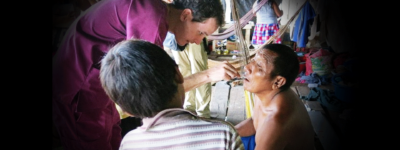
The indicators of the Orinoco Delta surpass the world average. Doctors believe these indigenous people are facing a much more aggressive strain that threatens the survival of an entire population. The authorities, meanwhile, have kept silence about this case. Here is the first installment of this investigative report.
It’s been a while since Venezuela’s anti-narcotics organisms have been having their alarms ringing. Now that the drug has been connected once again to the Bolivarian Government elites, it’s good to remember that the main airport in Caracas served as an aerial bridge for the largest Cartel in the hemisphere, the Chapo Guzmán’s. And it did it, surprising as it is, next to the presidential hangar.

The Aboriginal resistance celebrated on October 12 has had for the last four years a new expression in Musukpa, on the banks of the Paragua river, state of Bolívar. Natives of various ethnic groups, led by the Pemones, organized themselves to disarm the military forces and confront criminal gangs that seek to control the gold deposits in the area, which is now practically liberated territory. But not a utopia.
There is a legend in the mountain chain Sierra de Perijá that blames its felling on a transnational company. A journalist traveled the route of taro (locally known as ocumo) and after a trip through western Venezuela, he found that - contrary to official complaints - the root of discord is served in Bolivarian government markets.
A handshake between Hugo Chávez and Jiang Zemin, President of China, sealed a commercial relationship between Caracas and Beijing that totals two decades of cooperation marked by thousands of dollars and debts, half efficiency, and much opacity. Now, hundreds of official documents obtained by Armando.info and processed together with the Latin American Center for Investigative Journalism (CLIP) reveal, through a series of stories, how this exchange flowed, which was not always advantageous for Venezuela.
Read serie