Their faces have not appeared in any public manifestation portrayed in any banner, or brochures, or in social media. Their names were sentenced by someone with "revolutionary authority" that involved them in a case without conclusive evidence, even with assumptions that even though they were dismantled, that was worth little or nothing to reverse the aim, i.e. to criminalize the protest, frighten the protesters, leave someone behind bars. The official discourse that is determined to ensure that there are only political prisoners in Venezuela does not fit to them. These are ordinary Venezuelans who have ended up as political prisoners, particularly as forgotten political prisoners.

The country with the largest oil reserve in the hemisphere neglects its people with HIV-positive and lets them die. Since 2012, medicines are scarce and the pandemic is spreading unabated in Venezuela. That is why dozens of patients have embarked on a 4,000-kilometer epic journey in order to save their lives and reach for the promised land where they will find both employment and health.

The member of the US Cabinet, Wilbur Ross, is one of the owners of a company that provides maritime transport services to Pdvsa, a client that in 2015 contributed over 11 percent of the profits to his shipping company. Although the official had to get rid of his mercantile properties to hold his position, he kept a participation in that line of business through a complex offshore structure in the Cayman Islands. Thus, he did not only do business with chavista Venezuela, but also with an associate of Russian President Vladimir Putin. Both countries are subject to economic sanctions by Washington.
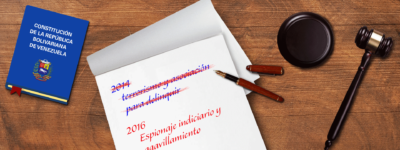
Five Trinitarian Muslims lived a nightmare in the coolest destination in the world. When they traveled to Caracas to process the visa required to go on pilgrimage to Mecca, they were detained by the political police on terrorism charges. They spent two years, six months and 25 days in the cells of Sebin (Bolivarian National Intelligence Service). Then, and to not acknowledge the error of imputing five innocent persons, the judge issued a penalty equal to the time they were locked up. The solution does not return the lost time to five foreigners who lived through the tragedy of dealing with the perverse and ineffective Judiciary created by chavismo.

The narrow victory of the No in the plebiscite called by the president of Colombia, Juan Manuel Santos, to endorse the peace agreement reached by FARC in Havana, Cuba, represents a stop along the way, perhaps the last stop, before the internal conflict ceases. With the imminent conversations that ELN will also initiate in Quito, the relatives of the persons disappeared in the state of Barinas wonder if their relatives, alive or dead, remain in the hands of FARC.

In November 2015, Efraín Campos Flores and Franqui Francisco Flores de Freitas, nephews of President Nicolás Maduro's wife, Cilia Flores, were arrested in Haiti while negotiating to send a shipment of 800 kilos of cocaine to the United States of America. At September 8 and 9 hearings, the party nights that they had with two informants of the DEA were evident. We went to the brothel they visited and we told the story from our point of view.
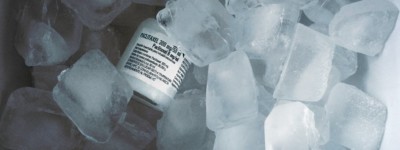
For three months, a reporter of Armando.info followed the lead of a seller exclusively engaged in diverting oncology medicines from state institutions to the black market, where they can be sold at 300 times higher prices. Her motivation was some basic questions: Are they angels or opportunists? How do they organize their networks? Still with unresolved doubts, she finds that it is a trade that has become possible only in the aftermath of the Bolivarian revolution in Venezuela, in the midst of chronic shortages and bureaucratic controls.
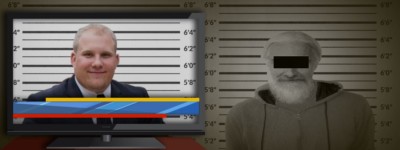
Two US citizens arrived in Venezuela this year on closed dates, and both were left in prison to face terrorism charges. Since then, their destinations began to diverge. Deportation is expected for one of them; a long season in Venezuelan dungeons for the other. But, above all, it is an exercise to test the definitions of 'terrorism' and 'news' for the propaganda apparatus of the chavista government, archrival of Washington. While the capture of one of them deserved a press conference by the Minister of Interior, the other went unnoticed. Why? Who is who in these parallel stories?
A handshake between Hugo Chávez and Jiang Zemin, President of China, sealed a commercial relationship between Caracas and Beijing that totals two decades of cooperation marked by thousands of dollars and debts, half efficiency, and much opacity. Now, hundreds of official documents obtained by Armando.info and processed together with the Latin American Center for Investigative Journalism (CLIP) reveal, through a series of stories, how this exchange flowed, which was not always advantageous for Venezuela.
Read serie