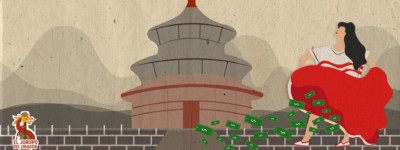
A collaborative journalism project on the economic and political relationship between Venezuela and China, patched together from official documents.
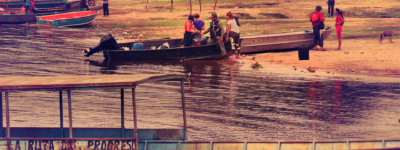
The porous border has loaded the inhabitants of the Colombian Amazon with the cases of its Venezuelan neighbors. Shortage and indifference has led patients to seek treatment even in Bogotá. Meanwhile in San Fernando de Atabapo, the transmitting mosquito has folded people back into their homes. But "God exists." So says a mural that receives visitors at the port.
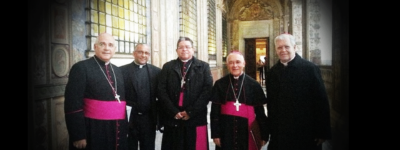
Facing the innovations of Pope Francis, the Church in Venezuela is not monolithic. The only Venezuelan Cardinal, Jorge Urosa Savino, has been exposed as a dissident of the reforms coming from Rome. His stance divides the clergy and leaves the conservative side in bad position for his succession as Archbishop of Caracas. At the same time, paradoxically, they reinforce the progressive sector of a church that until now has acted as a containment wall against Chavismo.
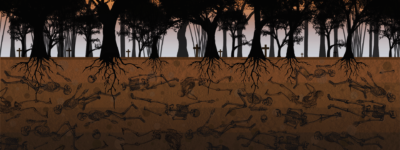
The fine line that separates Norte de Santander and Venezuela hides burial grounds of disappeared people from both sides, victims of violence by illegal armed groups that move at ease between both countries. Their relatives travel through trails, sidewalks and even cemeteries on the Venezuelan side, in search of their missing ones, without the help of any government.
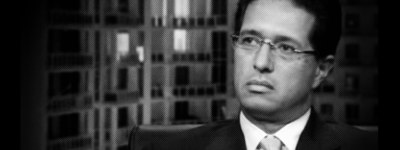
The last two major global investigations conducted by the International Consortium of Investigative Journalists revealed the offshore business of Eligio Cedeño, a former Venezuelan banker considered a fugitive from justice by some and politically persecuted by others. Company Cedel International Investment, owner of Bolívar Banco and Banpro, also requested the services of Mossack Fonseca to operate in the British Virgin Islands.
The name of the former head of the Venezuelan oil company in Colombia appears in the papers of Mossack Fonseca with 100% of the shares of a company created in June 2011, of which she requested to be dissolved six months later. She is unemployed since August 2015, when she was replaced by the ex-sister-in-law of President Nicolás Maduro

The so-called "insurance tsar" opened four offshore companies in a Caribbean island through the Panamanian law firm Mossack Fonseca. Corporación OFL, which consists of about 20 companies in his name, makes him one of the entrepreneurs in the insurance sector that has grown the most during the chavista government.

The ex-banker used the services of the Panamanian law firm Mossack Fonseca to register companies in tax havens while he was being tried in Venezuela by his ex-colleagues from the Stanford Group. He said he was a victim of chavism to be accepted as a client and thus protect his fortune.
A handshake between Hugo Chávez and Jiang Zemin, President of China, sealed a commercial relationship between Caracas and Beijing that totals two decades of cooperation marked by thousands of dollars and debts, half efficiency, and much opacity. Now, hundreds of official documents obtained by Armando.info and processed together with the Latin American Center for Investigative Journalism (CLIP) reveal, through a series of stories, how this exchange flowed, which was not always advantageous for Venezuela.
Read serie