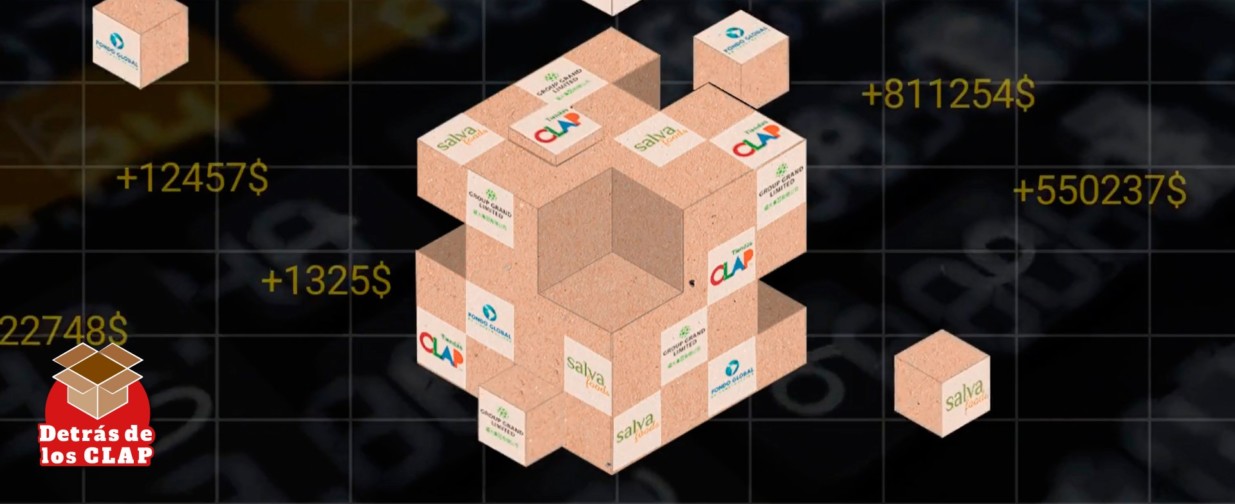

In the Bolivarian Revolution of Venezuela, which has a strong military component, military officers can act, simultaneously or progressively, even in contravention of the law, as troops leaders, government executives and even state contractors. One in three of the 785 military officers active in their time who, as private, contracted with the public administration during the last ten years, did it from companies that have the social purpose of construction. One case stands out: Major General Frank Herbert Lynch Dávila. The family company of which he is part has received contracts for construction works for years while the officer escalated positions until being in charge of the cement supply throughout the country.

An important ‘cold case' of high finance under Chavism can finally be solved thanks to the revelations arising out of the recent intervention in Curacao of Banco del Orinoco N.V., one of the jewels of the financial empire of the tycoon from Barinas ―the failed purchase in 2015 of Televen, one of the main private TV channels [in Venezuela]. This risky adventure left Vargas owing money to a somewhat questionable creditor. After delays and pressure, the banker had to dip into the turnover of his oil companies to get out of the difficulty.

In front of the curtain of collapse of the major financial group in Portugal, José Trinidad Márquez, a native of Caracas, offered the stellar performance to his lifetime career of fraud. After swindling the high management of the bank, he’s taken refuge presumably in some part of Spain, where the press baptized him as “the golden middleman” or “the man with thousand faces”. With his well trained routine of a petroleum expert, who offers himself to try and arrange business connections with PDVSA, perfected over the course of more than two decades, he’s earned himself millions of dollars, as well as criminal accusations in various countries.
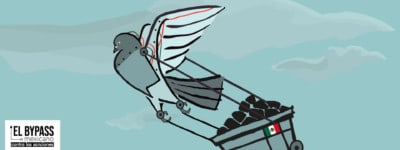
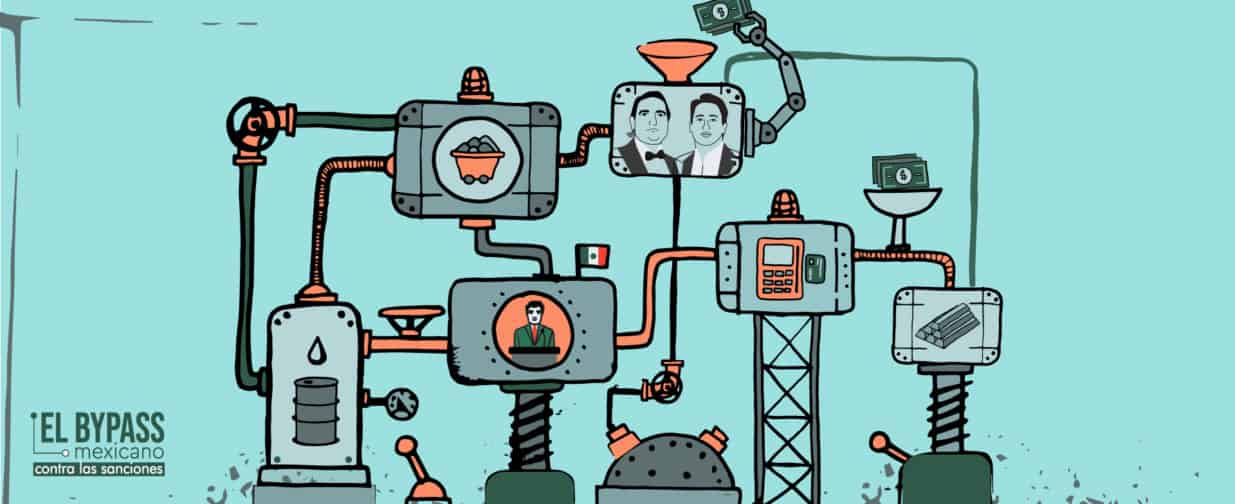
The business structure that Alex Saab had registered in Turkey—revealed in 2018 in an article by Armando.info—was merely a false start for his plans to export Venezuelan coal. Almost simultaneously, the Colombian merchant made contact with his Mexican counterpart, Joaquín Leal, to plot a network that would not only market crude oil from Venezuelan state oil company PDVSA, as part of a maneuver to bypass the sanctions imposed by Washington, but would also take charge of a scheme to export coal from the mines of Zulia, in western Venezuela. The dirty play allowed that thousands of tons, valued in millions of dollars, ended up in ports in Mexico and Central America.

Leaked documents on Libre Abordo and the rest of the shady network that Joaquín Leal managed from Mexico, with tentacles reaching 30 countries, ―aimed to trade PDVSA crude oil and other raw materials that the Caracas regime needed to place in international markets in spite of the sanctions― show that the businessman claimed to have the approval of the Mexican government and supplies from Segalmex, an official entity. Beyond this smoking gun, there is evidence that Leal had privileged access to the vice foreign minister for Latin America and the Caribbean, Maximiliano Reyes.
The business structure that Alex Saab had registered in Turkey—revealed in 2018 in an article by Armando.info—was merely a false start for his plans to export Venezuelan coal. Almost simultaneously, the Colombian merchant made contact with his Mexican counterpart, Joaquín Leal, to plot a network that would not only market crude oil from Venezuelan state oil company PDVSA, as part of a maneuver to bypass the sanctions imposed by Washington, but would also take charge of a scheme to export coal from the mines of Zulia, in western Venezuela. The dirty play allowed that thousands of tons, valued in millions of dollars, ended up in ports in Mexico and Central America.

As part of their business network based in Mexico, with one foot in Dubai, the two traders devised a way to replace the operation of the large international credit card franchises if they were to abandon the Venezuelan market because of Washington’s sanctions. The developed electronic payment system, “Paquete Alcance,” aimed to get hundreds of millions of dollars in remittances sent by expatriates and use them to finance purchases at CLAP stores.
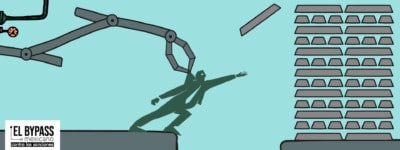
Through a company registered in Mexico – Consorcio Panamericano de Exportación – with no known trajectory or experience, Joaquín Leal made a daring proposal to the Venezuelan Guyana Corporation to “reactivate” the aluminum industry, paralyzed after March 2019 blackout. The business proposed to pay the power supply of state-owned companies in exchange for payment-in-kind with the metal.
A handshake between Hugo Chávez and Jiang Zemin, President of China, sealed a commercial relationship between Caracas and Beijing that totals two decades of cooperation marked by thousands of dollars and debts, half efficiency, and much opacity. Now, hundreds of official documents obtained by Armando.info and processed together with the Latin American Center for Investigative Journalism (CLIP) reveal, through a series of stories, how this exchange flowed, which was not always advantageous for Venezuela.
Read serie