The Hong Kong-registered company, linked to Colombian entrepreneurs Alex Nain Saab Morán and Álvaro Enrique Pulido Vargas, seems to be the great ally of Nicolás Maduro Government. Millionaire contracts for the supply of millions of CLAP boxes, the flagship program of Hugo Chávez's successor, were just the beginning. The company, with a foggy trail in Venezuela, also acts as the intermediary of the Ministry of Health in the purchase of the highly-scarce medicines in hospitals and pharmacies in the country.

The city of San Francisco, in California, is the most expensive in the United States of America and one of the most sophisticated. Birthplace of the hippie movement in the 60's and the current revolution in computers and the Internet, it now can pay a millenarian anachronism, as it is surrounded by a string of Mayan communities. More than 70,000 immigrants from Yucatán -5,000 kilometers (3,106 miles) away- swarm in suburbs like San Rafael or the Mission district. Attracted by what seems to be like a new gold rush, most arrive without knowing a word in English and just a few in Spanish to work as dishwashers and kitchen assistants in restaurants. However, the journey is not only through distance, but through culture, and the clash between ancestral customs and the demands of the post-industrial society, like alcoholism and drug addiction, arises.
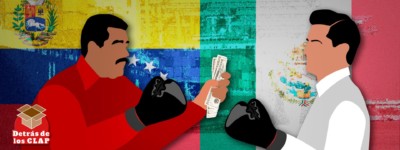
The accomplished election of the National Constituent Assembly has flourishing businesses between Mexico and Venezuela in suspense. The country of North America has considered adhering to the trade sanctions announced by Washington, now that the chavista regime will cease the Parliament elected in 2015 and will initiate a raid against the political opposition. If the decision materializes, it will be a blow to the flourishing trade exchange between the two countries, which has allowed stocking the Local Supply and Production Committees, President Nicolás Maduro’s emergency plan to face shortages and the discontent of the population with Mexican supplies. It is a silent business, marked by opacity, from which entrepreneurs linked to the Venezuelan regime, as Samark López and Alex Saab, have benefited.

In socialist Cuba waste is recycled but not as an ecological practice but as a means of survival. In one of the largest landfills in the capital you can see the so-called 'divers' digging in the dumps to feed the black market circuits, where authorities and traffickers have a slice, until the products -mayonnaise or meat, grains or soft drinks- arrive at the domestic pantries. With this work, Armando.info begins to publish in-depth reports made in the largest of the Antilles.
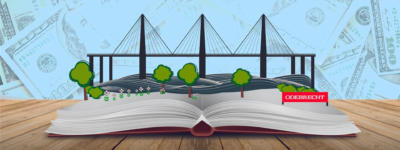
The Sole Authority of the southern states of Monagas and Anzoátegui acknowledges that it received several transfers from the Brazilian construction company, but for issuing a book. Anyway, his is just a footnote in the list of payments without invoice made by the Brazilians. Where are the big shots? In the Bolivarian Republic of Venezuela, silence is also a message.

The inclusion of the Venezuelan businessman in the list of drug traffickers and money launderers in the United States of America reveals the plot of his business with Nicolás Maduro’s regime. First, he sold kits for the government's housing building programs. Then, he benefited from the massive sale of food and even Christmas decorations; all this through a structure that has found, to date, shelter in the jurisdiction of Barbados. The small Caribbean island acts as the lair that hides some of its assets to the U.S. Department of the Treasury.
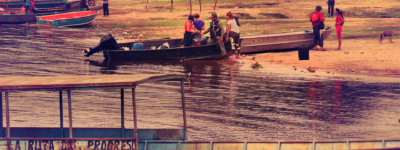
The porous border has loaded the inhabitants of the Colombian Amazon with the cases of its Venezuelan neighbors. Shortage and indifference has led patients to seek treatment even in Bogotá. Meanwhile in San Fernando de Atabapo, the transmitting mosquito has folded people back into their homes. But "God exists." So says a mural that receives visitors at the port.
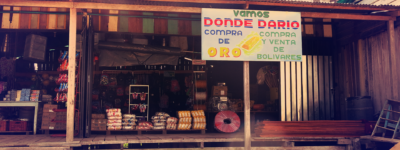
The last months of 2016 and the beginning of this year report an increase in the diagnosis of malaria in the western margin of the Venezuelan jungle province. The economic crisis has caused Venezuelan, Colombian, and Brazilian inhabitants of the border - to regard the illegal exploitation of gold as a possibility of instant wealth. In addition to a security problem due to the control, the indiscriminate felling in the region has intensified the work of sanitary authorities. This is a trip to in the depths of Venezuela, the one that is not in the headlines of the media or the agenda of the political leadership.
A handshake between Hugo Chávez and Jiang Zemin, President of China, sealed a commercial relationship between Caracas and Beijing that totals two decades of cooperation marked by thousands of dollars and debts, half efficiency, and much opacity. Now, hundreds of official documents obtained by Armando.info and processed together with the Latin American Center for Investigative Journalism (CLIP) reveal, through a series of stories, how this exchange flowed, which was not always advantageous for Venezuela.
Read serie