
From 2012 to 2015, the truck company Kamaz led the shipment records from Russia to Venezuela. Chassis, engines and a range of spare parts entered the country continuously through the local intermediary J.C. International 2004, C.A., a company where the latest partners are also engaged in the business of meat distribution. For years, the Venezuelan government and Kamaz have promised the construction of a car assembly plant in the country but it never materialized, as well as the idea of filling the roads of Venezuela with vehicles of this make.

The Aboriginal resistance celebrated on October 12 has had for the last four years a new expression in Musukpa, on the banks of the Paragua river, state of Bolívar. Natives of various ethnic groups, led by the Pemones, organized themselves to disarm the military forces and confront criminal gangs that seek to control the gold deposits in the area, which is now practically liberated territory. But not a utopia.
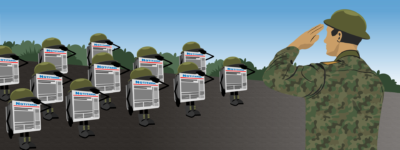
The main newspaper of the center of Venezuela and second of the country, 'Notitarde', was the setting for an experiment, a unique even for the Chavista era, with a clear military imprint. An Army colonel took over the company. It was part of the nervous media acquisition spree by capital close to the revolution from 2013 to 2015. The results, journalistic and business-wise, fall short of the expectations. However, the graduation classmate of Carlos Osorio and Pedro Carreño still wants to learn from the reporters at his service.

The 'eternal commander' of the Bolivarian Revolution wanted to have his chain of socialist supermarkets and to that end he ordered the expropriation of the Éxito Stores in 2010, which he believed to be Colombian. By the time he found out that they belonged to the French Casino Group, it was too late: the Paris government had intervened and obtained not only a hefty payment for the business, but also helped retain a French participation in what became Abastos Bicentenario. Seven years later, when the supply chain languishes, the French continue to sell up to 3,000 tons a year of non-food products through a company in Panama.
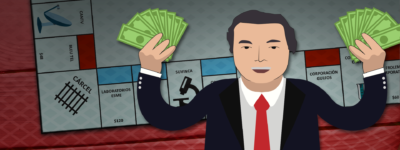
Overbilling, up to three times the original value, in merchandise, freight and insurance; incomplete exports; disproportionate down payments; companies created ad hoc days before being awarded contracts; diversion of funds to accounts of tax havens. There is everything in the menu of tricks used by entrepreneur Juan José Levy to keep the lion's share in the contracts he signed to supply TV antennas, hygiene products and medicines from Argentina to Venezuelan. A look at the Argentine judicial investigation report reveals such a diversity of irregularities that it is difficult to understand why official companies Suvinca or Cantv chose him as a supplier, or maybe not.
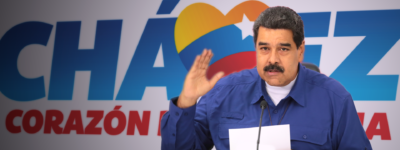
As if it were a novel series, the biggest corruption plot from Brazil involves a senior Venezuelan official, nothing less than the national head of state. But the Prosecutor's Office is silent. Although distanced from the government, Luisa Ortega Díaz ignored the issue, despite the fact that her counterparts had already notified her about the case.
Alex Saab's name reappears. The Colombian entrepreneur, linked to the contractor Global Construction Fund, seems to reinvent himself. Thanks to a company registered in Hong Kong, he has managed to sell food to Venezuela for over 200 million dollars in a negotiation approved with Nicolás Maduro’s signature and the intermediation of the State Government of Táchira, led by José Gregorio Vielma Mora. The products, paid with preferential dollars but billed with a surcharge, have been directed to the Local Committees for Supply and Production (CLAP), the flagship program whereby the Venezuelan authorities intend to mitigate hunger.
Wilmer José Brizuela became the epitome of 'pran' or leader of the Venezuelan prisons. He imposed its law over the state laws in a prison in the south of the country, in the midst of fierce fighting between clans and a badly perpetrated vengeance, episodes of a medieval saga. His legend, already known in the confines of the penitentiary system, has just gained national effect when a shooting on the island of Margarita showed that he was released with official permission, despite serving a sentence for complicity in a murder. He still has power. The following text is an abbreviated version of a profile originally prepared by the author for the anthology 'Los Malos' (The Bad Ones), published in 2015 by Universidad Diego Portales of Chile, under the editing of Argentinean chronicler Leila Guerriero.
A handshake between Hugo Chávez and Jiang Zemin, President of China, sealed a commercial relationship between Caracas and Beijing that totals two decades of cooperation marked by thousands of dollars and debts, half efficiency, and much opacity. Now, hundreds of official documents obtained by Armando.info and processed together with the Latin American Center for Investigative Journalism (CLIP) reveal, through a series of stories, how this exchange flowed, which was not always advantageous for Venezuela.
Read serie