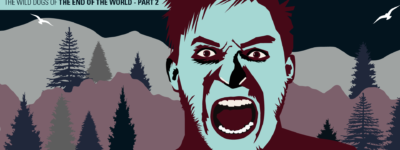
In order to control the new four-legged threat, even hunting parties in helicopter have had to be organized. But these dog packs, which have already made the countryside their territory, now besiege the southernmost urban centers of Argentina, from where they initially escaped in most cases. While there are already reports of attacks against people in the city of Ushuaia, several ideas to face the problem have been proposed.
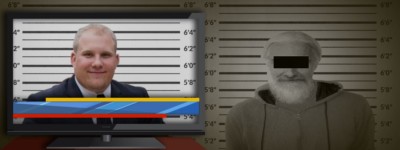
Two US citizens arrived in Venezuela this year on closed dates, and both were left in prison to face terrorism charges. Since then, their destinations began to diverge. Deportation is expected for one of them; a long season in Venezuelan dungeons for the other. But, above all, it is an exercise to test the definitions of 'terrorism' and 'news' for the propaganda apparatus of the chavista government, archrival of Washington. While the capture of one of them deserved a press conference by the Minister of Interior, the other went unnoticed. Why? Who is who in these parallel stories?

The narrow victory of the No in the plebiscite called by the president of Colombia, Juan Manuel Santos, to endorse the peace agreement reached by FARC in Havana, Cuba, represents a stop along the way, perhaps the last stop, before the internal conflict ceases. With the imminent conversations that ELN will also initiate in Quito, the relatives of the persons disappeared in the state of Barinas wonder if their relatives, alive or dead, remain in the hands of FARC.

Nearly 70 million of the state oil company insurance was in a limbo, which could well explain why the authorities did not collect any compensation for the explosion of the Amuay refinery.
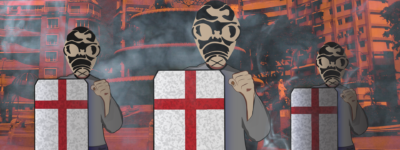
They cover their faces with masks or t-shirts. They improvise shields for self protection. They prepare and throw homemade bombs. They build barricades with whatever they get, and when they go to the marches, they are seen at the head of the protesters confronting the State security forces. Although not all the people who identify with the resistance know each other or act in the same way in the conflict zones located in the metropolitan area of Caracas, these are the main elements that distinguish the members of these groups, which are mostly from popular sectors and that, despite not ideologically connecting with the government of Nicolás Maduro, do not always follow the agenda of the Venezuelan opposition.
The 'eternal commander' of the Bolivarian Revolution wanted to have his chain of socialist supermarkets and to that end he ordered the expropriation of the Éxito Stores in 2010, which he believed to be Colombian. By the time he found out that they belonged to the French Casino Group, it was too late: the Paris government had intervened and obtained not only a hefty payment for the business, but also helped retain a French participation in what became Abastos Bicentenario. Seven years later, when the supply chain languishes, the French continue to sell up to 3,000 tons a year of non-food products through a company in Panama.
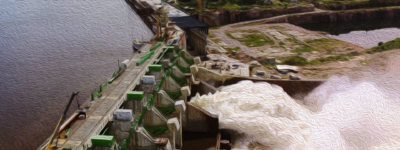
A solitary block of concrete, barely protected from flood by sump pumps, lies in the waters of the lower Caroní River. This is the case of the planned Manuel Piar hydroelectric plant in Tocoma, southern Venezuela, after paying US$ 10 billion —three times the budget and partly with funds from multilateral agencies— to several contractors, including the controversial Brazilian construction company. Of that amount, at least US$ 1 billion corresponded to irregularly paid foreign currencies through an administrative scheme (80-20, they called it) that an internal audit found, which was used to finance commissions to project management.
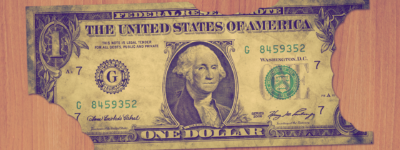
Delations of the 'Lava Jato' case in Brazil have produced an outpouring of testimonies about irregular payments that flood and splash power circles in Venezuela. But not everything happens between hierarchs of politics. The contractors, with Odebrecht at the head, distributed where they thought was necessary and in the right magnitudes. While papers of the Brazilian prosecutor's office continue filtering, the talk of the files mentions a wide range of personalities that includes from businessman Gustavo Cisneros to a member of the opposition.
A handshake between Hugo Chávez and Jiang Zemin, President of China, sealed a commercial relationship between Caracas and Beijing that totals two decades of cooperation marked by thousands of dollars and debts, half efficiency, and much opacity. Now, hundreds of official documents obtained by Armando.info and processed together with the Latin American Center for Investigative Journalism (CLIP) reveal, through a series of stories, how this exchange flowed, which was not always advantageous for Venezuela.
Read serie