
The Sole Authority of the southern states of Monagas and Anzoátegui acknowledges that it received several transfers from the Brazilian construction company, but for issuing a book. Anyway, his is just a footnote in the list of payments without invoice made by the Brazilians. Where are the big shots? In the Bolivarian Republic of Venezuela, silence is also a message.
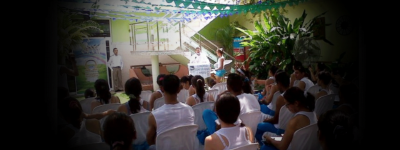
Leonel González built his own utopia of primitive communism on a plot of land in the municipality of San Francisco in Maracaibo, grouped around a singular vision of the Adventist creed. There nothing belongs to anyone and at the same time belongs to everyone. With funds from the government and his collectivist organization, he scored several successes in the cooperative management that, however, won him the hostility of the mayoralty and prosecutor's office, both chavistas, which do not lose the opportunity to harass him with constant accusations of sexual abuse and even tax fraud to which the strange behavior of 'The Prophet' gives grounds.
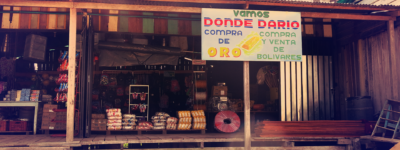
The last months of 2016 and the beginning of this year report an increase in the diagnosis of malaria in the western margin of the Venezuelan jungle province. The economic crisis has caused Venezuelan, Colombian, and Brazilian inhabitants of the border - to regard the illegal exploitation of gold as a possibility of instant wealth. In addition to a security problem due to the control, the indiscriminate felling in the region has intensified the work of sanitary authorities. This is a trip to in the depths of Venezuela, the one that is not in the headlines of the media or the agenda of the political leadership.

There is an open secret in “El Callejón” neighborhood in the city of Cucuta (Colombia) that is stronger than any cautious act. Nicolás Maduro Moros lived in the house 8-98 at times. The neighbors know that in there linger, as ghosts, some of the keys to understand how far the Colombian roots of the Venezuelan president go. Some whisper their theories; most of them keep quiet about their certainties. The house was put under the care of the president’s cousin, who rents it to strangers.
Leonel González built his own utopia of primitive communism on a plot of land in the municipality of San Francisco in Maracaibo, grouped around a singular vision of the Adventist creed. There nothing belongs to anyone and at the same time belongs to everyone. With funds from the government and his collectivist organization, he scored several successes in the cooperative management that, however, won him the hostility of the mayoralty and prosecutor's office, both chavistas, which do not lose the opportunity to harass him with constant accusations of sexual abuse and even tax fraud to which the strange behavior of 'The Prophet' gives grounds.
There is an open secret in “El Callejón” neighborhood in the city of Cucuta (Colombia) that is stronger than any cautious act. Nicolás Maduro Moros lived in the house 8-98 at times. The neighbors know that in there linger, as ghosts, some of the keys to understand how far the Colombian roots of the Venezuelan president go. Some whisper their theories; most of them keep quiet about their certainties. The house was put under the care of the president’s cousin, who rents it to strangers.
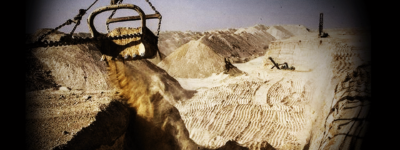
One hand of the government of Nicolás Maduro does not even know what the other hand does in Western Sahara, the former Spanish colony that Morocco illegally annexed itself in 1975. While the Chavismo pledges solidarity to the Saharawi pro-independence movement of the Polisario Front, the Venezuelan state's petrochemical companies continue to buy from the invader valuable phosphate cargoes extracted from mines in the occupied territories.

It is one of the so-called "rare earth elements" and a strategic material for high-tech industry. It abounds in the south of Venezuela, next to the border with Colombia. And although the Venezuelan government announced in 2009 measures for the military control of the deposits, since then, international smuggling routes have flourished, in which drug trafficking and informal traders participate. In a climate of mystery, now the Venezuelan coltan also threatens to become a source of geopolitical conflicts.
A handshake between Hugo Chávez and Jiang Zemin, President of China, sealed a commercial relationship between Caracas and Beijing that totals two decades of cooperation marked by thousands of dollars and debts, half efficiency, and much opacity. Now, hundreds of official documents obtained by Armando.info and processed together with the Latin American Center for Investigative Journalism (CLIP) reveal, through a series of stories, how this exchange flowed, which was not always advantageous for Venezuela.
Read serie