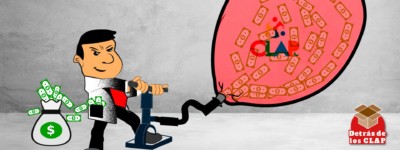
While the key role of Colombian entrepreneurs Alex Saab Morán and Álvaro Pulido Vargas in the import scheme of Nicolás Maduro’s Government program has come to light, almost nothing has been said about the participation of the traders who act as suppliers from Mexico. These are economic groups that, even before doing business with Venezuela, were not alien to public controversy.
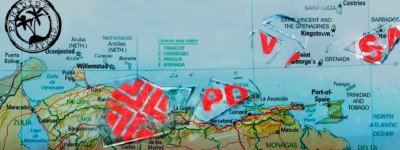
As if they were pieces of a broken mirror scattered in many islands around the world, several offshore companies form an oil-trading business network that reveals the trajectory of Alessandro Bazzoni and Francisco D'Agostino. Both of them, together with the Venezuelan telecommunications magnate Oswaldo Cisneros, landed in 2016 in the Orinoco Belt to fill the vacancy of the original partner, Harvest Natural Resources.

The former chavista governor of the State of Bolívar from 2004 to 2017 changed overnight from excessive media exhibitionism to low profile. His departure to Mexico completed the circle of the retirement plan he had been preparing while on civil service. He was now staying in the same country where the businesses of his daughter's husband flourished, which he had significantly fostered from his positions in Guayana. Now, with financial sanctions imposed on him by Canada and the United States, Francisco José Rangel Gómez prefers to stay under the radar.

Even though there are new brands, a new physical-chemical analysis requested by Armando.Info to UCV researchers shows that the milk powder currently distributed through the Venezuelan Government's food aid program, still has poor nutritional performance that jeopardizes the health of those who consume it. In the meantime, a mysterious supplier manages to monopolize the increasing imports and sales from Mexico to Venezuela.
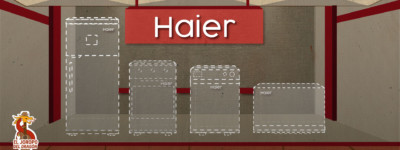
Venezuela sought to build an appliance factory to manufacture white goods for all homes by 2025. It ended up importing them from the factory funder itself: China’s Haier.

Beijing sold Hugo Chávez's government eight military transport aircrafts in 2011. In the shady deal, exchange rate manipulation and a wide margin left for the payment of extras meant each aircraft’s cost was unknown.

A collaborative journalism project on the economic and political relationship between Venezuela and China, patched together from official documents.
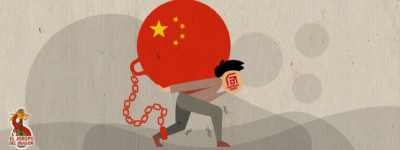
China wired US$1 billion to Hugo Chávez's government and tied it to the sale of an astronomical amount of iron ore, as debt grew and ambitious projects never materialised
A handshake between Hugo Chávez and Jiang Zemin, President of China, sealed a commercial relationship between Caracas and Beijing that totals two decades of cooperation marked by thousands of dollars and debts, half efficiency, and much opacity. Now, hundreds of official documents obtained by Armando.info and processed together with the Latin American Center for Investigative Journalism (CLIP) reveal, through a series of stories, how this exchange flowed, which was not always advantageous for Venezuela.
Read serie