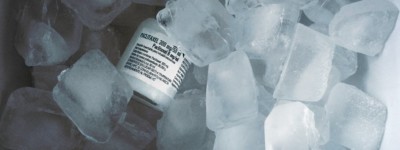
For three months, a reporter of Armando.info followed the lead of a seller exclusively engaged in diverting oncology medicines from state institutions to the black market, where they can be sold at 300 times higher prices. Her motivation was some basic questions: Are they angels or opportunists? How do they organize their networks? Still with unresolved doubts, she finds that it is a trade that has become possible only in the aftermath of the Bolivarian revolution in Venezuela, in the midst of chronic shortages and bureaucratic controls.
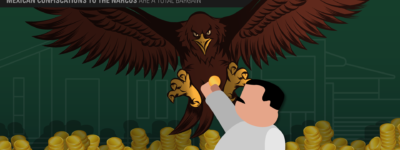
Since his first escape from a maximum security prison in 2001, to this date, the authorities have barely seized three jewels, two vehicles, one house, eight ammunition clips, one grenade, 171 munitions and four items, among other goods of lesser value from the mythical chief of the Sinaloa Cartel. After his extradition, the United States is now going after his fortune. But it is not the only case that needs to be amended. Nearly 200 requests for information to the Mexican State reveal that, even if the criminal organizations get beheaded in the War against Drugs, their wealth and financial structures remain almost intact, little of it is confiscated, but even less thereof is publicly known.
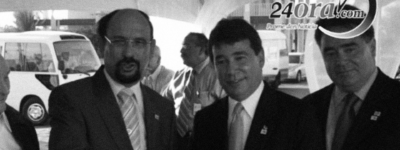
After making friends with chavista and opposition politicians, the brothers Leopoldo and Andrés Castillo Bozo were charged in 2009 by the Venezuelan Prosecutor for the crime of identity theft to buy public debt bonds. The Panama Papers revealed that at the time, the owners of Grupo Banvalor had three companies in the Virgin Islands, in addition to 22 more companies distributed in the United States of America, Aruba, the Dominican Republic, and Panama. Never had a flight been so well secured.
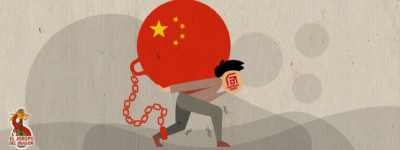
China wired US$1 billion to Hugo Chávez's government and tied it to the sale of an astronomical amount of iron ore, as debt grew and ambitious projects never materialised
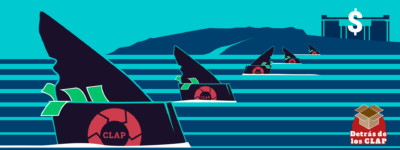
A small bank in Antigua and Barbuda, but controlled by Venezuelans, is at the center of some of the financial operations of Nicolas Maduro’s regime. Created in 2008 and with a diffuse trace for years, North International Bank began to take off in 2016 when it was authorized to operate in Caracas. Since then, it has been channeling millions of dollars to and from the coffers of the revolutionary ‘nomenklatura.’

For some months now, parliament members of different opposition political parties have been offering to make informal proceedings on request before agencies like the Colombian Attorney General's Office and the United States Department of the Treasury. They issue letters of good conduct to those responsible for negotiations on the imports for CLAP combos, so that such agencies absolve or stop investigating entrepreneurs like Carlos Lizcano, a subordinate of the already sanctioned Alex Saab and Alvaro Pulido. The fact that the most active defense of the main social program and focus of corruption of the government of Nicolas Maduro comes from the heart of the National Assembly 'in contempt' is just one of the ironies of this story.
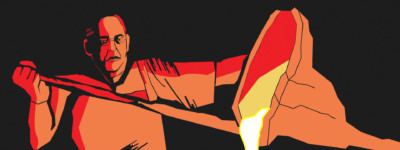
The former chavista governor of the State of Bolívar from 2004 to 2017 changed overnight from excessive media exhibitionism to low profile. His departure to Mexico completed the circle of the retirement plan he had been preparing while on civil service. He was now staying in the same country where the businesses of his daughter's husband flourished, which he had significantly fostered from his positions in Guayana. Now, with financial sanctions imposed on him by Canada and the United States, Francisco José Rangel Gómez prefers to stay under the radar.
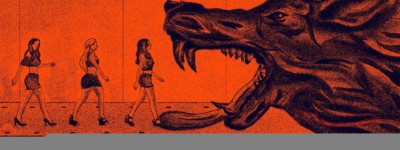
Six out of every ten Venezuelan sex workers killed abroad since 2012 were in Mexico. In that country it is often about attractive girls who work as high-level company ladies or night-time waiters, businesses directly managed by organized crime. There are many clues that lead to the Guadalajara New Generation Cartel at the peak of this trade in people, with the complicity of others such as Los Cuinis and Tepito. Often the human merchandise becomes the property of capos and assassins, with whom he knows the hell of the femicides
A handshake between Hugo Chávez and Jiang Zemin, President of China, sealed a commercial relationship between Caracas and Beijing that totals two decades of cooperation marked by thousands of dollars and debts, half efficiency, and much opacity. Now, hundreds of official documents obtained by Armando.info and processed together with the Latin American Center for Investigative Journalism (CLIP) reveal, through a series of stories, how this exchange flowed, which was not always advantageous for Venezuela.
Read serie