
They lose their freedom as soon as they set foot on any Trinidadian beach, and their “original sin” is an alleged debt that these women can only pay by becoming sexual merchandise. They are tamed through a prior process of torture, rotation and terror, until they lose the urge to escape. The growth of these human trafficking networks is so evident that regional and parliamentary reports admit that the complicity of the island’s justice system in this machinery of deceit and violence multiplies the number of victims.

Armando.info publishes an excerpt from the extended edition of “Los brujos de Chávez” (Chávez’s warlocks and witches), the lauded book by David Placer, a Venezuelan journalist based in Spain, published in Venezuela by the publishing company Editorial Dahbar. The chronicle shows what could be the highlight of the Chavista Santeria, the exhumation of the remains of Simón Bolívar, ordered by the late president commander because he was determined to prove that the Liberator had been poisoned in San Pedro Alejandrino. From there, Placer cites episodes and talks with witnesses in Miami and Caracas, who claim that Chávez became a santero (practitioner of Santeria) before assuming the presidency for the first time in 1999. With his research, Placer completed a deliberately hidden aspect of the volcanic life of the leader of the Bolivarian process.
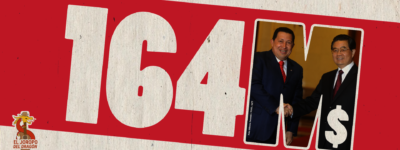
In 2010, Beijing asked for an office in Caracas to oversee joint projects. Today, it lies in disrepair, so what happened to the U$164 million earmarked for refurbishment?

Six out of every ten Venezuelan sex workers killed abroad since 2012 were in Mexico. In that country it is often about attractive girls who work as high-level company ladies or night-time waiters, businesses directly managed by organized crime. There are many clues that lead to the Guadalajara New Generation Cartel at the peak of this trade in people, with the complicity of others such as Los Cuinis and Tepito. Often the human merchandise becomes the property of capos and assassins, with whom he knows the hell of the femicides
They lose their freedom as soon as they set foot on any Trinidadian beach, and their “original sin” is an alleged debt that these women can only pay by becoming sexual merchandise. They are tamed through a prior process of torture, rotation and terror, until they lose the urge to escape. The growth of these human trafficking networks is so evident that regional and parliamentary reports admit that the complicity of the island’s justice system in this machinery of deceit and violence multiplies the number of victims.
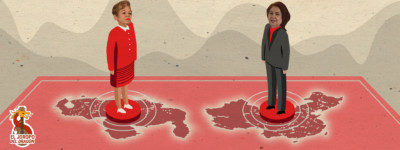
Under Hugo Chávez, two women represented Venezuela in dealings with China to obtain project finance: banker Edmée Betancourt and diplomat Rocío Maneiro. These are their stories.
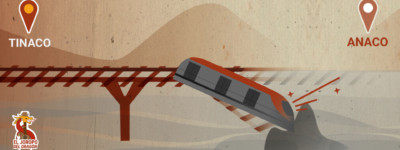
Scarcely a third of the planned 468-kilometre stretch of railway from Tinaco to Anaco that drew on US$2.74 billion from the Venezuelan-Chinese Joint Fund has been built. Labour and environmental conflicts lie in its wake.
In 2010, Beijing asked for an office in Caracas to oversee joint projects. Today, it lies in disrepair, so what happened to the U$164 million earmarked for refurbishment?
A handshake between Hugo Chávez and Jiang Zemin, President of China, sealed a commercial relationship between Caracas and Beijing that totals two decades of cooperation marked by thousands of dollars and debts, half efficiency, and much opacity. Now, hundreds of official documents obtained by Armando.info and processed together with the Latin American Center for Investigative Journalism (CLIP) reveal, through a series of stories, how this exchange flowed, which was not always advantageous for Venezuela.
Read serie