The Government of Nicolás Maduro gave China the large-scale manufacture of the Venezuelan cuatro (four in English, as it has four strings). The policy of mass production of the instrument, with the purpose of adding it to the well-known National System of Children and Youth Orchestras, created by José Antonio Abreu, has prevailed over the quality entailed in its handcrafted frame. It is not, as it seems, just a cultural resignation or a contradiction with the nationalist discourse of the historical comrades of the self-styled Bolivarian revolution. Each unit manufactured in the Far East is a business for importers and ends up costing almost the same as the guitar manufactured in the country.

The amount invested over 13 years in Lake Valencia in north central Venezuela, could have been used by the Chavista regime to build 18 new hospitals like the Cardiológico Infantil Latinoamericano de Caracas, (Latin American Children’s Cardiology Hospital) or a fairway like the Panama Canal. But against the flow of the 385 million US dollars dumped in the water, the basin has become the largest septic tank in Latin America. This is one of the most serious environmental problems in the region, not only because of the pollution but also because of the social cost of 8,000 families who are at risk of losing their homes and even drowning in sewage. Before addressing this situation, the regime of Nicolás Maduro prefers to help the victims of Hurricanes Harvey and Irma, and leave the neighbors abandoned to the eternal Venezuelan improvisation.
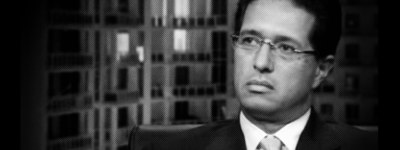
The last two major global investigations conducted by the International Consortium of Investigative Journalists revealed the offshore business of Eligio Cedeño, a former Venezuelan banker considered a fugitive from justice by some and politically persecuted by others. Company Cedel International Investment, owner of Bolívar Banco and Banpro, also requested the services of Mossack Fonseca to operate in the British Virgin Islands.

Mexican authorities blame Venezuelan authorities for not verifying the quality of the products included in the combos for the Local Supply and Production Committee (CLAP). Even though the companies provided false information on the packaging, they wash their hands with bureaucratic technicalities and continue granting export permits. In Venezuela, no official wants to talk about it. For months, the Government of Nicolás Maduro bought and distributed among the poorest several powdered milk brands of the lowest quality.

Aside from ethical questions, the logic of a private entity opening an offshore company seems elementary —to declare its profits in a territory where it can pay less tax than it should in its place of origin. But when it comes to a state-owned company like Petróleos de Venezuela, which is not obliged to pay taxes - and therefore does not need to evade them - it is difficult to understand why within its business scheme there is contracting with companies established in tax havens and there is even the creation of their own subsidiaries in these places. What does the Venezuelan public treasury gain from this?

The city of San Francisco, in California, is the most expensive in the United States of America and one of the most sophisticated. Birthplace of the hippie movement in the 60's and the current revolution in computers and the Internet, it now can pay a millenarian anachronism, as it is surrounded by a string of Mayan communities. More than 70,000 immigrants from Yucatán -5,000 kilometers (3,106 miles) away- swarm in suburbs like San Rafael or the Mission district. Attracted by what seems to be like a new gold rush, most arrive without knowing a word in English and just a few in Spanish to work as dishwashers and kitchen assistants in restaurants. However, the journey is not only through distance, but through culture, and the clash between ancestral customs and the demands of the post-industrial society, like alcoholism and drug addiction, arises.
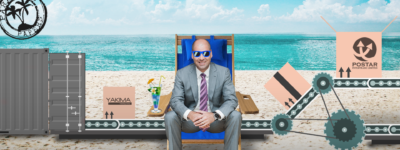
The Venezuelan businessman quietly established a complex corporate structure until last February the US Treasury Department accused him of being the "front man" of the Vice President of the Republic, Tareck El Aissami. The Paradise Papers leak now reveals that his business assets are broader than those initially blocked by the US authorities and that the island of Barbados was chosen to create a sort of holding that groups the companies with which he participated in the oil and food business, among others, and whereby he was awarded millionaire contracts with the Venezuelan government.
Venezuelan Álvaro Gorrín escaped on his yacht in 2009 after the intervention of Banco Canarias, but he and his board members did not resign themselves to losing everything to the Venezuelan government. Between the support of an influential New York law firm and the expertise of Appleby to create companies in tax havens, the then fugitive from the Venezuelan justice drew a strategy to rescue something from the ruins.
A handshake between Hugo Chávez and Jiang Zemin, President of China, sealed a commercial relationship between Caracas and Beijing that totals two decades of cooperation marked by thousands of dollars and debts, half efficiency, and much opacity. Now, hundreds of official documents obtained by Armando.info and processed together with the Latin American Center for Investigative Journalism (CLIP) reveal, through a series of stories, how this exchange flowed, which was not always advantageous for Venezuela.
Read serie