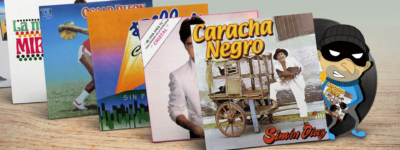
Mundo Digital USA, a company created in Florida, and related to another company based in Madrid, is using almost all the Venezuelan musical heritage after a suspicious and unclear operation. This is a situation derived from the paradigm change of consumption of songs and a certain indifference on behalf of the main record labels and those in charge of their labels, who failed to notice ahead of time the changes bequeathed by technology. The affected - singers, composers - remain the usual victims. The money they should receive for their creations arrives incomplete and sometimes it never does at all.

A dozen Venezuelan politicians appear among the beneficiaries of the Brazilian contractor and the names of Elías Jaua, a deputy, and Francisco Rangel Gómez, governor of Bolívar state in Venezuela, stand out. Odebrecht’s representative in Venezuela, Euzenando Azevedo, confessed to everything in Brazil and his testimony -leaked in this article- remarks that the list includes prominent individuals from Venezuela’s government but also leaders of the opposition such as Manuel Rosales, Carlos Ocariz and Antonio Ledezma.
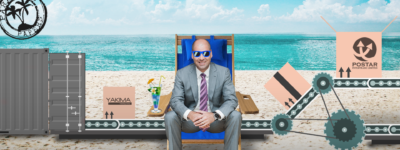
The Venezuelan businessman quietly established a complex corporate structure until last February the US Treasury Department accused him of being the "front man" of the Vice President of the Republic, Tareck El Aissami. The Paradise Papers leak now reveals that his business assets are broader than those initially blocked by the US authorities and that the island of Barbados was chosen to create a sort of holding that groups the companies with which he participated in the oil and food business, among others, and whereby he was awarded millionaire contracts with the Venezuelan government.

With ridiculous fines and a brief freezing of accounts, Mexican authorities said they had sanctioned in 2018 the companies of that country that participated in the million-dollar scheme that supplied products to Clap boxes, including those that sold milk powder of poor nutritional quality. With Alex Saab - architect and head of these operations- arrested in Cape Verde three weeks ago, the irregularities of an investigation that seemed to have done justice in Mexico begin to be revealed. In the end, it was a punishment that neither hurt nor compensated anyone.

Former combatants of what was the largest guerrilla in Latin America - who separated from the peace agreement signed in 2016 - are in a process of transition and rearrangement of criminal structures, where illicit drug trafficking and illegal mining continue to be the main focal points, now in Venezuelan territory. They have met with indigenous peoples and communities in Amazonas to formalize their presence in the territory, affirming that they have the support of the Venezuelan Government. But they also move to lands of the Orinoco Mining Arc, where they even control coltan mines.
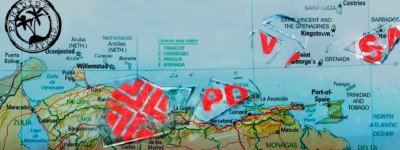
As if they were pieces of a broken mirror scattered in many islands around the world, several offshore companies form an oil-trading business network that reveals the trajectory of Alessandro Bazzoni and Francisco D'Agostino. Both of them, together with the Venezuelan telecommunications magnate Oswaldo Cisneros, landed in 2016 in the Orinoco Belt to fill the vacancy of the original partner, Harvest Natural Resources.

Even Diosdado Cabello has false followers. The Government of Venezuela has been able to measure itself in political cyberspace. Hence, it has created an authentic machinery of robots at the service of the governing party in social media that is mainly controlled by public officials and coordinated from ministries. This is the result of several studies, testimonials and applications that measure the "Twitterzuela" convulsion.

From 2012 to 2015, the truck company Kamaz led the shipment records from Russia to Venezuela. Chassis, engines and a range of spare parts entered the country continuously through the local intermediary J.C. International 2004, C.A., a company where the latest partners are also engaged in the business of meat distribution. For years, the Venezuelan government and Kamaz have promised the construction of a car assembly plant in the country but it never materialized, as well as the idea of filling the roads of Venezuela with vehicles of this make.
A handshake between Hugo Chávez and Jiang Zemin, President of China, sealed a commercial relationship between Caracas and Beijing that totals two decades of cooperation marked by thousands of dollars and debts, half efficiency, and much opacity. Now, hundreds of official documents obtained by Armando.info and processed together with the Latin American Center for Investigative Journalism (CLIP) reveal, through a series of stories, how this exchange flowed, which was not always advantageous for Venezuela.
Read serie