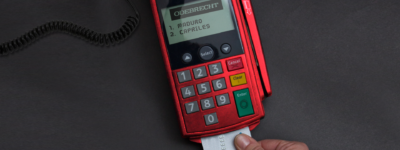
In Mexico, there is a long tradition of cheating in the supply of dairy products packaged for social programs. Hence, it should not be surprising that the Venezuelan corruption had found in that country the perfect formula to include in the so-called CLAP Boxes a paste purchased at auction price as cow's powdered milk. For a mysterious reason, ghostly or barely known companies are the ones monopolizing purchase orders from Venezuela.
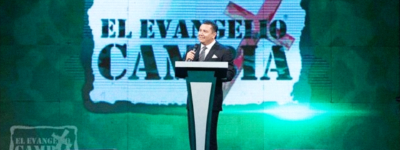
The leader of the Maranatha Church in Venezuela is also an entrepreneur who has seen in the dynamics of the Venezuelan economy an opportunity to grow his private wealth. Without a clear purpose, according to the documentation of the law firm Mossack Fonseca, the pastor weighted up the possibility of chairing a company in a tax haven.

In November 2015, Efraín Campos Flores and Franqui Francisco Flores de Freitas, nephews of President Nicolás Maduro's wife, Cilia Flores, were arrested in Haiti while negotiating to send a shipment of 800 kilos of cocaine to the United States of America. At September 8 and 9 hearings, the party nights that they had with two informants of the DEA were evident. We went to the brothel they visited and we told the story from our point of view.
New leaks of the "award-winning delation" that the construction company's proconsul in Caracas, Euzenando Azevedo, made to Brazilian justice last December reveal that in the elections to choose the successor to the late commander Hugo Chávez, Odebrecht made a Solomonic decision: to reach an understanding with the candidates of the Government and the Opposition and make contributions to the campaigns of both. It would not be on an equal footing: one was given $35 million, the other $15 million. But with the same consideration for both: that the public works contracts in charge of the multinational engineering company had to be respected.

The member of the US Cabinet, Wilbur Ross, is one of the owners of a company that provides maritime transport services to Pdvsa, a client that in 2015 contributed over 11 percent of the profits to his shipping company. Although the official had to get rid of his mercantile properties to hold his position, he kept a participation in that line of business through a complex offshore structure in the Cayman Islands. Thus, he did not only do business with chavista Venezuela, but also with an associate of Russian President Vladimir Putin. Both countries are subject to economic sanctions by Washington.

More than 550 million U.S. dollars went through the cliff in some Pdvsa Agrícola (PDVSA Agriculture) facilities, which were partly built in four provinces of Venezuela. A new file of judicial documents and bank deposits of the Lava Jato operation -leaked for this report- involve Egly Ramírez (uncle of the former president of the state oil company and current ambassador of Venezuela to the United Nations, Rafael Ramírez) and other former officials in the biggest corruption scandal of recent years that established a systematic payment of bribes to people with responsibilities in the governments of Latin America, so that the Brazilian multinational could win the tenders.
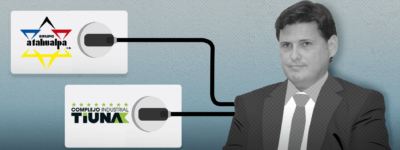
In business, the entrepreneurs who have amassed fortunes to the rhythm of the schizophrenic chavista economy stand out. A Peruvian-Spanish citizen has developed a real emporium in the last 13 years. Once pointed out as the potential financial channel between the Venezuelan government and the Spanish political party Podemos, it could only be confirmed that he works shoulder to shoulder with the military and every day incorporates new businesses to his emporium. Atahualpa Fernández continues to gain ground among the entrepreneurs protected by the ruling party.
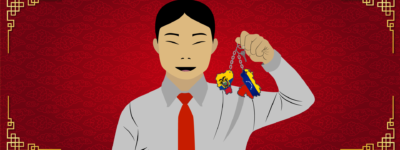
In two countries of "Bolivarian" regimes, Ecuador and Venezuela, Chinese investment has found avid business partners over the last ten years. The Asian giant has injected vast financial resources and resources for infrastructure works into both nations, many of them unfinished. But the other side of the coin is the conditions imposed on the partners in draconian contracts that the Chinese entities and companies have subscribed by their local counterparts. In the height of the 21st Century, the foreseeable power of the future imposes terms and conditions of the 19th Century, like the suspension of labor laws, importation of labor, exclusive use rights, more expensive financing, payments in foreign currency, among other nineteenth-century privileges.
A handshake between Hugo Chávez and Jiang Zemin, President of China, sealed a commercial relationship between Caracas and Beijing that totals two decades of cooperation marked by thousands of dollars and debts, half efficiency, and much opacity. Now, hundreds of official documents obtained by Armando.info and processed together with the Latin American Center for Investigative Journalism (CLIP) reveal, through a series of stories, how this exchange flowed, which was not always advantageous for Venezuela.
Read serie