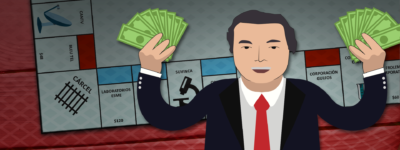
Overbilling, up to three times the original value, in merchandise, freight and insurance; incomplete exports; disproportionate down payments; companies created ad hoc days before being awarded contracts; diversion of funds to accounts of tax havens. There is everything in the menu of tricks used by entrepreneur Juan José Levy to keep the lion's share in the contracts he signed to supply TV antennas, hygiene products and medicines from Argentina to Venezuelan. A look at the Argentine judicial investigation report reveals such a diversity of irregularities that it is difficult to understand why official companies Suvinca or Cantv chose him as a supplier, or maybe not.
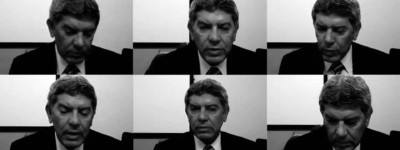
Kept under lock and key in Brazil since late 2016, the videos of the Odebrecht trial on Venezuela finally appear. As of today, Armando.info begins to publish a string of clips that show the faces of the witnesses who documented the case. Some of their statements had already been published on this platform, but here they go with the voice and tone of their protagonists.

The Venezuelan fishing fleet and the seafood processing industry went under due to massive imports from the Government. Ironically, the shot underneath the waterline was fired by military officers in charge of overseeing the national sovereignty. A subsidiary of the Savings Bank of the Army imported tuna and other goods. The business was shielded with guaranteed access to Government currencies at preferential rates and alliances with the new business class.
Delations of the 'Lava Jato' case in Brazil have produced an outpouring of testimonies about irregular payments that flood and splash power circles in Venezuela. But not everything happens between hierarchs of politics. The contractors, with Odebrecht at the head, distributed where they thought was necessary and in the right magnitudes. While papers of the Brazilian prosecutor's office continue filtering, the talk of the files mentions a wide range of personalities that includes from businessman Gustavo Cisneros to a member of the opposition.
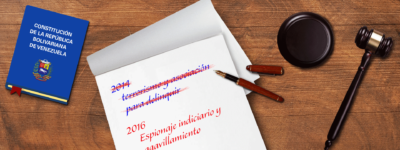
Five Trinitarian Muslims lived a nightmare in the coolest destination in the world. When they traveled to Caracas to process the visa required to go on pilgrimage to Mecca, they were detained by the political police on terrorism charges. They spent two years, six months and 25 days in the cells of Sebin (Bolivarian National Intelligence Service). Then, and to not acknowledge the error of imputing five innocent persons, the judge issued a penalty equal to the time they were locked up. The solution does not return the lost time to five foreigners who lived through the tragedy of dealing with the perverse and ineffective Judiciary created by chavismo.

Their faces have not appeared in any public manifestation portrayed in any banner, or brochures, or in social media. Their names were sentenced by someone with "revolutionary authority" that involved them in a case without conclusive evidence, even with assumptions that even though they were dismantled, that was worth little or nothing to reverse the aim, i.e. to criminalize the protest, frighten the protesters, leave someone behind bars. The official discourse that is determined to ensure that there are only political prisoners in Venezuela does not fit to them. These are ordinary Venezuelans who have ended up as political prisoners, particularly as forgotten political prisoners.

Hurried by the drop of oil prices and the collapse of oil production, Nicolás Maduro bets on the Orinoco Mining Arc as a formula to increase the resources that are so scarce in the national coffers. Under the "joint venture" system, the Government has ended up agreeing with companies insufficiently known in the extra-activist industry, like Corporación Faoz. Among the beneficiaries is Gold Reserve, the Canadian mining company that Hugo Chávez expelled from Venezuela years ago. The Paradise Papers filtering shows that both have registered companies in that tax haven called Barbados.

The Mayas, who in the classical era of their civilization mysteriously depopulated large stone cities in Mesoamerica, now, a millennium later, abandon their adobe and thatched roof villages in the Yucatán peninsula at a rate that could be comparable. Every year, over a thousand cross the border into the United States. This time their motives are not a mystery: local poverty and the promise of a better life, especially in California, push them to exodus. The traffic is bidirectional, in any case. While the people march north, back to the south come remittances of money, hopes and new cultural patterns. However, life for those who stay at home is not easy, especially for married women, who submit not only to an endless wait, but also to asphyxiating social norms.
A handshake between Hugo Chávez and Jiang Zemin, President of China, sealed a commercial relationship between Caracas and Beijing that totals two decades of cooperation marked by thousands of dollars and debts, half efficiency, and much opacity. Now, hundreds of official documents obtained by Armando.info and processed together with the Latin American Center for Investigative Journalism (CLIP) reveal, through a series of stories, how this exchange flowed, which was not always advantageous for Venezuela.
Read serie