Since its opening in 2017, the Porsche Design Tower quickly became a symbol of luxury and ostentation in South Florida. Magnates from all over the world retreat behind the discretion of its tinted glass windows and virtually anonymous legal entities. But in recent days, two police investigations into illegal financial flows from abroad placed the building under an inconvenient spotlight. The justice just seized an apartment of over five million dollars from a Venezuelan agent.

The ex-banker used the services of the Panamanian law firm Mossack Fonseca to register companies in tax havens while he was being tried in Venezuela by his ex-colleagues from the Stanford Group. He said he was a victim of chavism to be accepted as a client and thus protect his fortune.

Former combatants of what was the largest guerrilla in Latin America - who separated from the peace agreement signed in 2016 - are in a process of transition and rearrangement of criminal structures, where illicit drug trafficking and illegal mining continue to be the main focal points, now in Venezuelan territory. They have met with indigenous peoples and communities in Amazonas to formalize their presence in the territory, affirming that they have the support of the Venezuelan Government. But they also move to lands of the Orinoco Mining Arc, where they even control coltan mines.

Beijing sold Hugo Chávez's government eight military transport aircrafts in 2011. In the shady deal, exchange rate manipulation and a wide margin left for the payment of extras meant each aircraft’s cost was unknown.
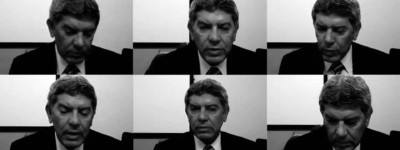
Kept under lock and key in Brazil since late 2016, the videos of the Odebrecht trial on Venezuela finally appear. As of today, Armando.info begins to publish a string of clips that show the faces of the witnesses who documented the case. Some of their statements had already been published on this platform, but here they go with the voice and tone of their protagonists.

New documents show that the Hong Kong-registered company is one of Nicolás Maduro’s favorite to do business. While there are companies in the Venezuelan private sector that wait years for the payment of foreign currencies, in 2017, this company obtained at least two contracts for the supply of over 20 million of the boxes that the Government sells at subsidized prices, and it invoiced 113 million dollars to the Ministry of Food in just one day. The papers also confirm the connection of this company with Fondo Global de Construcción (Global Construction Fund), a network built by Colombian entrepreneurs Alex Nain Saab Morán and Álvaro Enrique Pulido Vargas, through which they obtained contracts under Hugo Chávez for the construction of prefabricated houses.

The judicial authorities of Switzerland found a connection between the wife and the mother-in-law of the former Venezuelan minister with at least 40 million dollars deposited in eight bank accounts, one of which was shared with one of the main negotiators of bribes and kickbacks between Odebrecht and the governments of Chávez and Maduro. Although they asked the Venezuelan justice to investigate the matter, the courts denied any possibility of addressing the case and the Venezuelan Prosecutor's Office, led by Tarek William Saab, acts as if not aware.
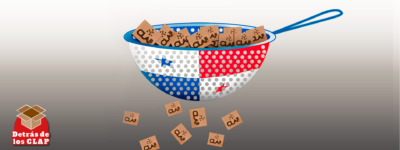
The tension between the governments of Nicolás Maduro and Juan Carlos Varela is nonstop. But the surge of trade retaliations from both capitals peculiarly leaves some of the companies that since 2017 provide merchandise to Chávez’s flagship program (the Local Supply and Production Committees - Clap) unharmed. Two of these companies show the profile of opportunistic shell companies.
A handshake between Hugo Chávez and Jiang Zemin, President of China, sealed a commercial relationship between Caracas and Beijing that totals two decades of cooperation marked by thousands of dollars and debts, half efficiency, and much opacity. Now, hundreds of official documents obtained by Armando.info and processed together with the Latin American Center for Investigative Journalism (CLIP) reveal, through a series of stories, how this exchange flowed, which was not always advantageous for Venezuela.
Read serie