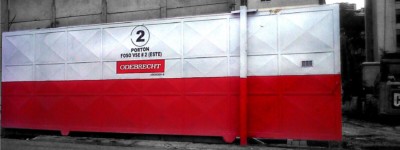
The iceberg begins to emerge. Odebrecht admits to American authorities that it distributed bribes in twelve international markets, including Venezuela, where most bribes were paid: 98 million US dollars in bribes and kickbacks. At least 35 million of all that money was contributed by the civil engineering company to the last electoral campaign of Hugo Chávez. In court declarations, an informer speaks of under-the-table payments of at least US$ 600,000 in the name of company Andrade Gutierrez. This is just the beginning of the revelations.
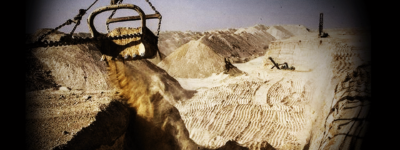
One hand of the government of Nicolás Maduro does not even know what the other hand does in Western Sahara, the former Spanish colony that Morocco illegally annexed itself in 1975. While the Chavismo pledges solidarity to the Saharawi pro-independence movement of the Polisario Front, the Venezuelan state's petrochemical companies continue to buy from the invader valuable phosphate cargoes extracted from mines in the occupied territories.
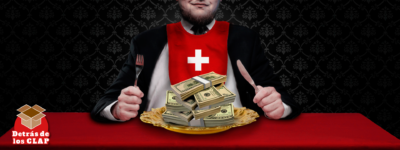
The Venezuelan government has resorted to a myriad of trading intermediaries to provide imported merchandise for the Claps, its star food aid program. With massive purchases in international markets, it poorly satisfies the hunger of popular sectors while safely feeding the financial flows that end in bank accounts in Hong Kong or Switzerland.

The name of the former head of the Venezuelan oil company in Colombia appears in the papers of Mossack Fonseca with 100% of the shares of a company created in June 2011, of which she requested to be dissolved six months later. She is unemployed since August 2015, when she was replaced by the ex-sister-in-law of President Nicolás Maduro
José Gregorio Vicari Méndez, an assimilated physician of the Bolivarian Army, was the successful owner of Proveeduría Médica VDS, a medical supplies company that signed hundreds of contracts with the health office during the oil boom. This finding is part of a database developed by Armando.info with the public information contained in the National Register of Contractors. Although the Organic Law of the Office of the Comptroller states that an active official could have administrative responsibility if entering into contracts with the State, Vicari Méndez, who is no longer a member of the company, presents an argument in his defend that goes beyond the tragedy of Venezuela's shortages. "If I have a patient with a requirement, if there is no material, but I know where there is, I look for it. What should I do? Should I not operate?
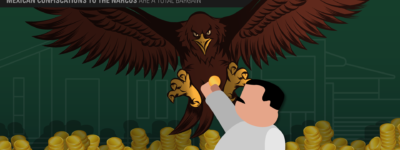
Since his first escape from a maximum security prison in 2001, to this date, the authorities have barely seized three jewels, two vehicles, one house, eight ammunition clips, one grenade, 171 munitions and four items, among other goods of lesser value from the mythical chief of the Sinaloa Cartel. After his extradition, the United States is now going after his fortune. But it is not the only case that needs to be amended. Nearly 200 requests for information to the Mexican State reveal that, even if the criminal organizations get beheaded in the War against Drugs, their wealth and financial structures remain almost intact, little of it is confiscated, but even less thereof is publicly known.
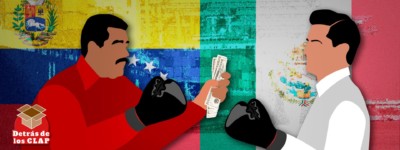
The accomplished election of the National Constituent Assembly has flourishing businesses between Mexico and Venezuela in suspense. The country of North America has considered adhering to the trade sanctions announced by Washington, now that the chavista regime will cease the Parliament elected in 2015 and will initiate a raid against the political opposition. If the decision materializes, it will be a blow to the flourishing trade exchange between the two countries, which has allowed stocking the Local Supply and Production Committees, President Nicolás Maduro’s emergency plan to face shortages and the discontent of the population with Mexican supplies. It is a silent business, marked by opacity, from which entrepreneurs linked to the Venezuelan regime, as Samark López and Alex Saab, have benefited.

A dozen Venezuelan politicians appear among the beneficiaries of the Brazilian contractor and the names of Elías Jaua, a deputy, and Francisco Rangel Gómez, governor of Bolívar state in Venezuela, stand out. Odebrecht’s representative in Venezuela, Euzenando Azevedo, confessed to everything in Brazil and his testimony -leaked in this article- remarks that the list includes prominent individuals from Venezuela’s government but also leaders of the opposition such as Manuel Rosales, Carlos Ocariz and Antonio Ledezma.
A handshake between Hugo Chávez and Jiang Zemin, President of China, sealed a commercial relationship between Caracas and Beijing that totals two decades of cooperation marked by thousands of dollars and debts, half efficiency, and much opacity. Now, hundreds of official documents obtained by Armando.info and processed together with the Latin American Center for Investigative Journalism (CLIP) reveal, through a series of stories, how this exchange flowed, which was not always advantageous for Venezuela.
Read serie