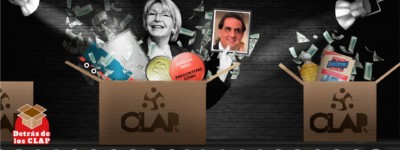
The rebel prosecutor, Luisa Ortega Díaz, opened a real Pandora's box. Her accusation against Group Grand Limited not only strips the food import business for the popular Local Supply and Production Committee (CLAP). It also confirms that the businessman from Barranquilla, Alex Nain Saab Morán, hitherto linked to former Colombian senator, Piedad Córdoba, is also a hinge of President Nicolás Maduro. From the port of Veracruz, at least 7 million boxes of food have been shipped to Venezuela by a ghost company with no permanent office in Caracas or Mexico, and thanks to a millionaire contract with the Venezuelan government.

These far ends of glaciers and fjords, that once enchanted Darwin and Chatwin, Theroux and Hudson, have become the setting for postapocalyptic sceneries in which packs of feral dogs not only prey the local fauna and the cattle but also attack people. These dogs’ fangs have contributed, as much as the crisis, to decimate the traditional sheep cattle sector both sides of the international border between Argentina and Chile across Tierra del Fuego, the southernmost land ever colonized by man.
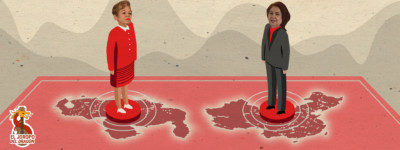
Under Hugo Chávez, two women represented Venezuela in dealings with China to obtain project finance: banker Edmée Betancourt and diplomat Rocío Maneiro. These are their stories.

The so-called "insurance tsar" opened four offshore companies in a Caribbean island through the Panamanian law firm Mossack Fonseca. Corporación OFL, which consists of about 20 companies in his name, makes him one of the entrepreneurs in the insurance sector that has grown the most during the chavista government.
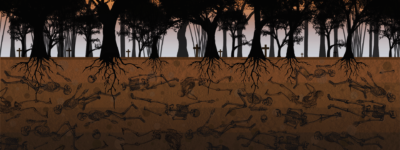
The fine line that separates Norte de Santander and Venezuela hides burial grounds of disappeared people from both sides, victims of violence by illegal armed groups that move at ease between both countries. Their relatives travel through trails, sidewalks and even cemeteries on the Venezuelan side, in search of their missing ones, without the help of any government.
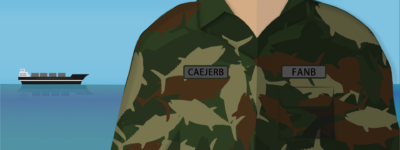
The Venezuelan fishing fleet and the seafood processing industry went under due to massive imports from the Government. Ironically, the shot underneath the waterline was fired by military officers in charge of overseeing the national sovereignty. A subsidiary of the Savings Bank of the Army imported tuna and other goods. The business was shielded with guaranteed access to Government currencies at preferential rates and alliances with the new business class.
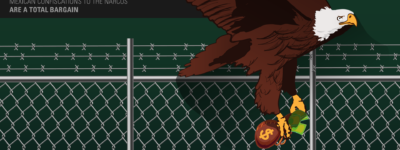
More than 850 Mexican drug traffickers have been extradited to the United States. But then, when the work seems to be done, Mexico realizes that in just a few cases it investigated enough to seize the finances of the mafias. Now a new chapter threatens to sour the binational fight against drug trafficking: the claim the United States has made of the fortunes of the capos.
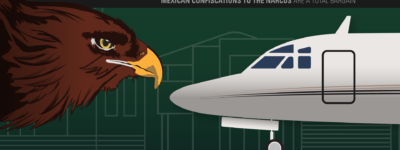
Disarray and bad practices in the State's institutions often cause many of the seized assets during judicial operations to not only be reinstated to their owners, but -to top it all- they have to be compensated by the treasury. The emblematic case of a light aircraft the Attorney General's Office took for its use, that was later scrapped as junk and in the end caused millions of costs to the State, proves that the confiscations, even if scarce, sometimes even become a lousy business for taxpayers.
A handshake between Hugo Chávez and Jiang Zemin, President of China, sealed a commercial relationship between Caracas and Beijing that totals two decades of cooperation marked by thousands of dollars and debts, half efficiency, and much opacity. Now, hundreds of official documents obtained by Armando.info and processed together with the Latin American Center for Investigative Journalism (CLIP) reveal, through a series of stories, how this exchange flowed, which was not always advantageous for Venezuela.
Read serie